In engineering and product development, 'cost-effectiveness' is often misunderstood as 'the cheaper, the better.' However, in fields like structural components, mobility equipment, UAVs, and automobiles, the real value lies in a material’s comprehensive performance and lifecycle return.
With 20+ years of experience in advanced composites, GBTECH delivers lightweight, high-performance solutions across diverse applications. This article compares carbon fiber with plastics and aluminum from four perspectives: performance, cost structure, lifecycle value, and application scenarios.
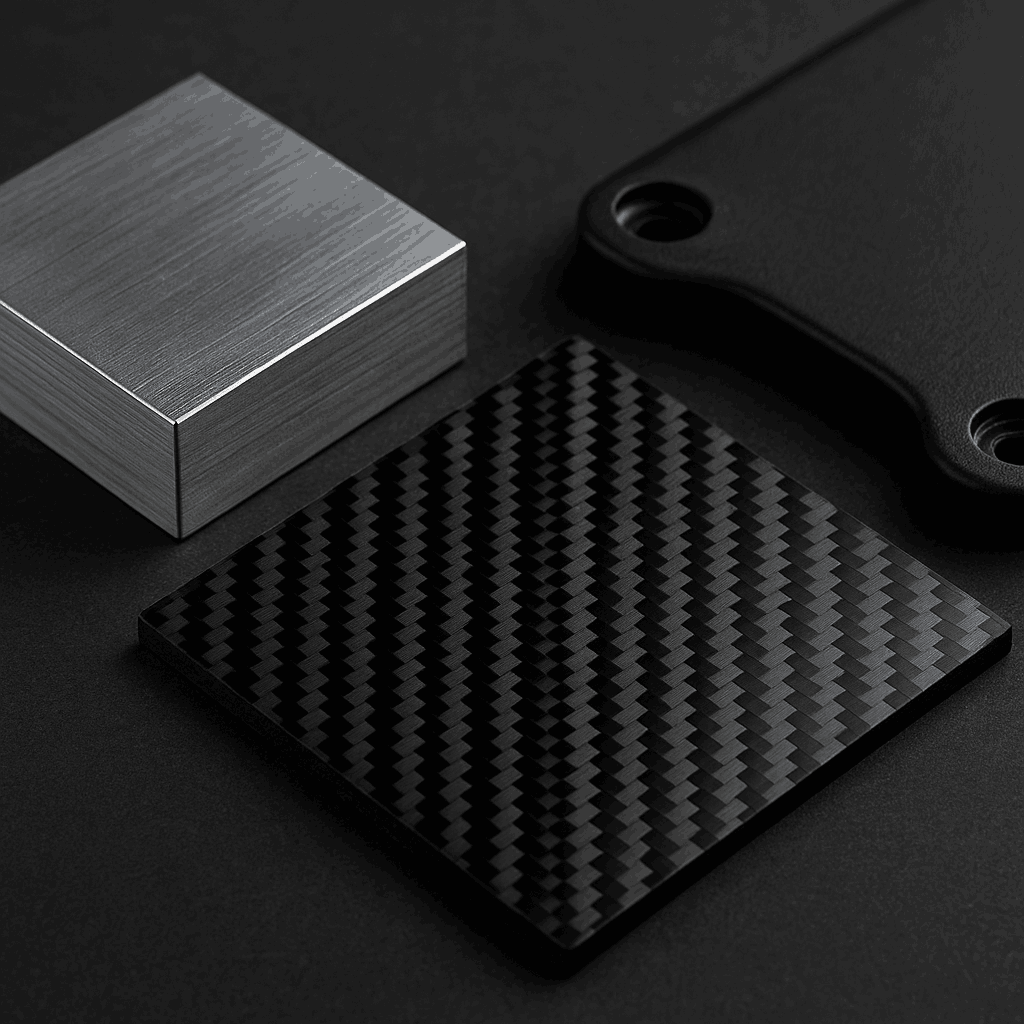
Material | Strength-to-weight Ratio | Fatigue Resistance | Corrosion Resistance | Thermal Stability |
Plastic | ★ | ★ | ★★ | ★ |
Aluminum | ★★★ | ★★ | ★★ | ★★ |
Carbon Fiber | ★★★★★ | ★★★★★ | ★★★★★ | ★★★★ |
Plastic is lightweight but weak and prone to aging. Aluminum is easy to machine but loses strength under long-term fatigue. Carbon fiber outperforms both in mechanical strength, fatigue resistance, and corrosion protection — especially in demanding applications.
While carbon fiber may seem expensive at first glance, its long-term value becomes apparent through reduced maintenance, less frequent replacement, and improved energy efficiency:
- Aluminum parts (e.g., drone frames) often need repair after long-term vibration.
- Plastic components degrade from UV exposure and thermal cycling.
- Carbon fiber remains structurally sound for 5–10 years even under high stress — offering long-term ROI.
Indicator | Plastic | Aluminum | Carbon Fiber | Note |
Initial Price ($/kg) | 2–4 | 6–10 | 25–60 | — |
Replacement Frequency | Frequent | 1–3x/year | Rarely Needed | — |
Annual Maintenance Cost | ★★★ | ★★ | ★ | Lower is better |
Lifecycle Value | ★ | ★★ | ★★★★ | Higher is better |
From a lifecycle perspective, carbon fiber is more cost-effective than aluminum or plastic — especially in EVs, robotics, and high-performance machinery.
GBTECH supplies carbon fiber solutions for:
- UAV frames: 40% lighter, 30–50% longer flight time
- EV battery boxes and door frames: reduce 100–200kg of weight
- Sports gear (e.g., skateboards, bicycles): enhanced control and durability
- Robotics and automation: increased stiffness and precision
With optimized production lines, GBTECH now supports low-volume, mid-range market customization at accessible pricing.
True cost-effectiveness isn’t about being cheap — it’s about maximizing durability, performance, and return on investment. For industries demanding strength, lightness, safety, and aesthetics, carbon fiber is no longer a luxury but an evolving standard.
With GBTECH, you’re choosing the future of materials.
GBTECH U.S. Sales & Support
Website: www.gbtechmaterials.com
Email: zane@gbtechgroup.cn
Phone: +1 (510) 902-9987
California Warehouse: 38758 Buckboard Common, Fremont, CA 94536, United States
China Manufacturing Headquarters: Building 1, Left Side, Tangye Road, Xinxu, Huiyang, Huizhou, China
Selected standard products are stocked in California. Contact us to confirm availability, shipping origin and lead time for your specifications.


 WhatsApp
 E-mail